
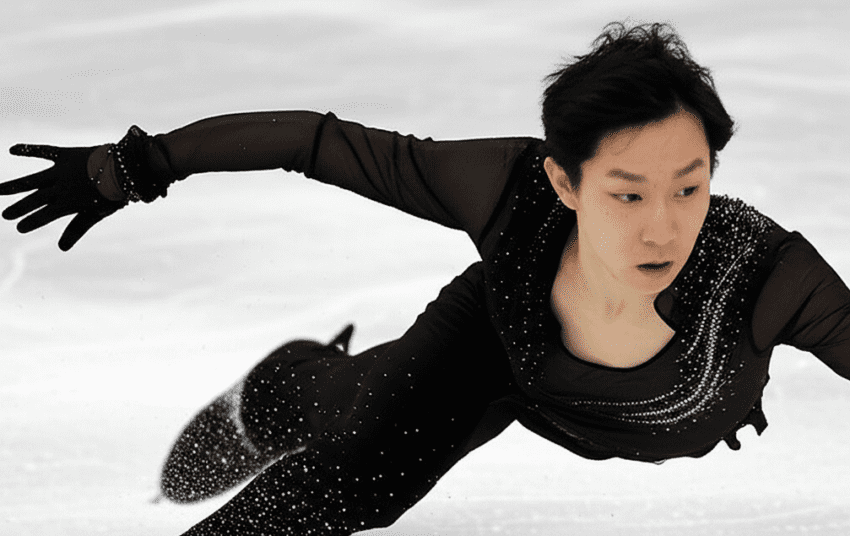
The Evolution of the Quad: Ice Skating’s Most Daring Jump ⛸️🌀
In the ethereal world of figure skating, where grace and gravity wage a delicate war, one move stands as the gladiator’s choice: the quadruple jump — or simply, the quad. A combination of sublime athleticism and terrifying risk, it is both the crown jewel and the forbidden fruit of competitive skating. But how did this most daring leap evolve from an audacious curiosity into the backbone of today’s high-stakes contests? Was it always destined to be the ultimate test, or merely a glitch in the harmony of ice and artistry?
From Single Spins to a Leap into the Unknown
The figure skating jump, much like the written word, started modestly. Early 20th-century champions dazzled with graceful singles and doubles, the ambitious lofts of skaters barely clearing two revolutions in mid-air. The athletic equivalent of a gentle creek, the sport hesitated before plunging into rapid torrents.
But by the 1980s, the thirst for pushing boundaries took hold. The triple jump — a three-revolution pirouette in freezing flight — became the gold standard. It was the summit everyone aspired to, and a steep one at that. Then came the quad: four full revolutions in less than a second, landing on a blade no wider than a strip of paper.
Imagine throwing a spinning top so fiercely that, rather than wobbling, it becomes nearly invisible — fleeting yet precise. The quad’s entrance was less a whisper and more a thunderclap disrupting the elegance of yesteryear.
Striking Antithesis: Artistry Meets Athletic Obsession
Here lies a paradox wrapped in thin skates: figure skating’s purest artistry juxtaposed with its rawest athleticism. The quad epitomizes this tension. It demands that a dancer become an astronaut, spinning furiously in a vacuum where a single falter means doom.
The early masters of the quad — the likes of Kurt Browning, who landed the first ratified quad toe loop in 1988 — balanced on a fault line between beauty and brutality. Their performances were thrilling riddles: can a man executed with razor precision also be a poet? Or does the quest for quads reduce ice skating to a mechanical contest, a contest almost laughably at odds with its own lyrical soul?
And yet, without the quad, the sport might seem trapped in sepia-toned nostalgia, spinning slowly away. It is the motor that ratchets up scores and captivates audiences worldwide, even if those audiences sometimes miss the nuance behind the daring spins.
The Science of Defying Gravity
Contrary to popular belief, the quad is not just luck or raw power. It is biomechanics, physics, and psychology choreographed with military precision. To rotate four times in the air requires launching off the ice with explosive strength, pulling limbs tightly to increase angular velocity — a principle as old as the universe but applied in the blink of a skater’s eye.
Elite skaters often experience up to 3 to 4 G-forces upon landing, more than many rollercoasters, yet on feet smaller than your palm.
This interplay of muscle, momentum, and minute adjustments to each landing is akin to a hummingbird performing a ballet at supersonic speeds. Each jump manifests a fleeting victory over gravity—one that can switch to devastating failure if the landing wavers by a fraction of a second.
When Risk Became a Double-Edged Sword
But here’s where irony slips onto thin ice. The quad’s rise hasn’t just delighted audiences, it’s reshaped the sport’s very identity. Skaters and coaches must now gamble—every program a high-wire act between innovation and injury. What was once an impressive flourish has become mandatory. The quad transformed from a dazzling coup de maître to a grueling baseline, a “must-have” in the technical ledger lest a skater fade to obscurity.
Has figure skating traded some of its old-world poetry for sheer survival? This relentless arms race in jumps has left some lamenting a loss of interpretation and flow, replaced by a mechanical tally of quads landed and points scored. The ice seems less a stage and more a battlefield.
Not all stories skate the same path.
Take Yuzuru Hanyu, whose quads soar with a seemingly effortless grace, his technique a perfect blend of artistry and raw power — like a falcon in midflight, swift but poetic. Then consider Nathan Chen, whose audacious arsenal of five different quads in competition reads like a technical manifesto challenging the very limits of human physiology.
These athletes embody extremes of the quad’s evolution—some strive for balance, others for dominance. Their triumphs are a compass pointing toward a sport that remains alive precisely because it will not be content with standing still on frozen ground.
The Quad’s Future: Innovation or Overreach?
Looking ahead, the quad faces both promise and peril. Advances in training methodologies, biomechanics, and even skate technology may reduce injury risk and push achievement further. Yet, as skaters flirt with the quintuple jump — an almost fanciful prospect — questions rise: will the pursuit of evermore rotations erode ice skating’s soul or simply funnel human dreams into sharper focus?
Perhaps the quad will mature from an outlaw jump into a rite of passage, or maybe it will become an exciting artifact, frozen in the sport’s history like the piano in an abandoned concert hall—beautiful, but silent.
For now, the quad remains a relentless reminder of what it means to flirt with danger for the sake of art, to leap into the void not knowing if the ice will catch you. It is a lesson in courage and impermanence — a reminder that some evolution is as breathtaking as it is fragile.
In the end, the quadruple jump is more than mere rotations on ice; it is a story of human ambition spun at dizzying speeds — a symbol of how we constantly strive to rise above limits, even when the fall seems inevitable. So next time you watch a skater launch for that quad, ask yourself: what is more daring, the leap itself or the choice to keep leaping?