
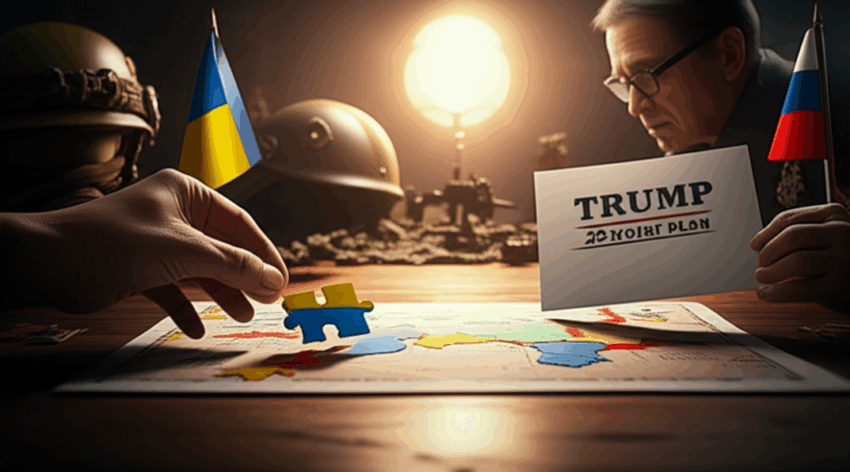
Does the Trump Administration’s 28-Point Plan Reward Russia by Giving Up Ukrainian Land? 🧐⚔️
At a glance, the Trump administration’s proposed 28-point plan for Ukraine reads like a diplomatic peace pitch deck. But is it a blueprint for genuine resolution, or a blueprint for humiliation masquerading as compromise? The heart of the controversy boils down to a question that few political chess players want to admit openly: does this plan effectively hand Russia the prize it’s been fighting for, by quietly conceding Ukrainian land? The parallels, after all, ripple with an uncomfortable irony, as if we’re watching a Cold War sequel where history is scripted by those who forgot its lessons.
The Proposal’s Anatomy: Shifting Borders as Political Currency
Details leaked from this elusive 28-point plan suggest a medley of measures—security guarantees, economic reforms, and notably territorial adjustments. For anyone familiar with the sweeping geography of 21st-century geopolitics, to lose even a sliver of sovereign ground is akin to a country feeling its own shadow shrink. The plan reportedly includes provisions that some interpret as tacit acceptance of Russian control over Crimea and large parts of the Donbas region.
This would mean the United States, under Trump’s stewardship, championing what looks like a compromise that rewards Moscow’s aggressive territorial grabs—an act reminiscent of handing over your umbrella during a storm in hopes that it might stop raining. The paradox is striking: how does one negotiate peace by endorsing that which started the war?
“Treating territorial integrity as a negotiable commodity risks turning sovereignty into a bargaining chip,” said a European foreign affairs analyst. If diplomacy is a dance, this choreography feels like a gamble played with weighted dice.
Irony on the Global Stage: From Defender to Enabler?
Here enters the biting irony: a U.S. administration famous for its “America First” rhetoric edges towards a policy that seems to slip “Ukraine First” into the background, effectively facilitating a Russian territorial gain. It’s rather like showing up at a neighborhood barbecue to protect your own hotdog only to serve the nosy neighbor’s plate instead.
During the Trump years, an administration skeptical of NATO commitments flirted with autocrats, muddling America’s stance in Eastern Europe. And yet, the 28-point outline suggests a formalization rather than dismantling of Russian influence in Ukraine—raising eyebrows about whether the United States is actually empowering the very aggressor it rhetorically opposed.
The High Stakes: Ukraine as a Living Map of Contrasts
Ukraine today is a sprawling canvas painted in sharp contrasts: a post-Soviet democracy yearning for Western alliances juxtaposed against entrenched Russian cultural, economic, and military influence. To redraw its borders is to rewrite human stories—communities divided, families displaced, identities fragmented. It is a painful antithesis where national pride collides with geopolitical pragmatism.
As rivers carve through ancient valleys, borders too have etched themselves through Ukraine’s land — hard and fast lines that belie the fluidity of human experience. To cede any inch under duress is like watching an oak tree surrender its tallest branches to the wind—does the trunk remain the same?
An Anecdote from a Forgotten Dinner Table
Years ago, a Ukrainian-American friend recounted conversations around his grandmother’s table in a small village near Donetsk. The land was not just dirt; it was memory, resilience, the forgotten wisdom of generations. When he heard talks of selling or swapping territory, he likened it to trading a family heirloom for a fleeting sense of calm. “Once it’s gone,” he said, “you can never hold the same light again.”
This captures the essence of what’s at stake. For many Ukrainians, this isn’t just a diplomatic puzzle—it’s a deep fracture in the mosaic of their identity.
What the International Lawbooks Say
From a legal vantage point, the plan toes a controversial line. International law, particularly the United Nations Charter, enshrines territorial integrity and inviolability. Yet, exceptions and precedents lurk in the gray shadows—Kosovo, Crimea itself, and other disputed lands illustrate how realpolitik often trumps legality.
The Trump plan’s subtle nod towards Russia’s territorial claims could be interpreted as tacit acceptance of faits accomplis, setting a precedent that brute force can translate into written treaties. And when might makes right, what happens to those who pick up pens and expect justice to be blindfolded and balanced?
Geopolitical Ripples and the Road Ahead
Behind the closed doors of Washington and Moscow, the stakes are enormous. Acceptance of Russian control over Ukrainian land risks emboldening further expansionist ambitions, chilling NATO’s eastward resolve, and fracturing the unity of democratic alliances. It is a sapling of concession planted in the garden of uncertainty, with roots threatening to disrupt global order.
Yet, in the quiet corridors of power, some argue the plan is a necessary evil—a way to halt bloodshed and disengage from a protracted conflict that drains resources and patience. After all, diplomacy often demands trading the ideal for the attainable, even when the attainable tastes bitter.
A Final Reflection: Peace or Pyrrhic Victory?
Perhaps the most haunting question is whether the Trump administration’s 28-point plan will be remembered as a masterstroke of pragmatic peacebuilding or as a capitulation that etched lines of loss deep into Ukraine’s map. Like a jigsaw puzzle missing critical pieces, the plan seems to offer a semblance of order while leaving vast fractures beneath the surface.
History has often shown that rewarding aggression with territorial concessions is a perilous path—much like planting salt where flowers once bloomed. The echoes of Munich ’38 linger in the collective memory as a cautionary tale of appeasement’s double-edged sword.
In offering Ukraine as the price for momentary peace, the plan challenges us to confront what peace truly means—absence of conflict or justice served? The answer might well shape the fate of an entire region, and possibly the credibility of international norms, for decades to come.
And in this tangled saga, one wonders: can a land so fiercely loved by its people ever truly be “given up,” or does its spirit persist like wildfire beneath the snow? 🔥❄️