
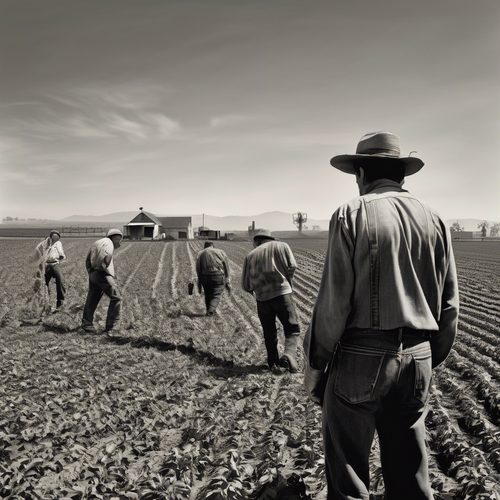
About 200 Arrested in Immigration Raids on Southern California Farms, Feds Say 🚨🌾
In the sun-drenched fields of Southern California, where avocados dangle like small green treasures ready for harvest, a harsh reality has unfurled. Amid the aromatic earth and laborious hands, about 200 individuals swept into the net of immigration raids, highlighting a resounding irony: the very hands that cultivate the nation’s food can often find themselves uprooted in the most precarious of circumstances.
According to federal officials, these raids were part of a crackdown on undocumented workers, cloaked in the promise of tightening borders and enforcing laws meant to secure the nation. Yet, who benefits from these sweeping actions? Is it the farmers left to contend with labor shortages, or perhaps the consumers facing the repercussions of rising food prices? In a world where irony weighs heavier than a harvest load, such questions linger—unaddressed yet undeniable.
The Labor Behind Our Food
As the sun rises over California’s fertile valleys, thousands of farmworkers—many of whom are undocumented—embody the heartbeat of the agricultural industry. They rise before dawn, a collective force working silently like invisible gears in an ever-turning machine. The produce they harvest nourishes millions, yet their existence is often dismissed. Instead, headlines echo tales of raids, of broken families, while the very industry that feeds the nation operates in a duality marked by dependency and disdain.
According to a 2023 report from the National Agricultural Statistics Service, over 50% of farmworkers in California are undocumented, revealing a poignant truth: farms thrive on their labor even as policies threaten their very livelihoods. 📈
The recent raids, while rooted in compliance with federal immigration laws, starkly illustrate a striking antithesis: the agricultural industry leans heavily on the labor of those it simultaneously criminalizes. Imagine a garden bursting with vibrant produce while the roots are systematically severed—this is the paradox that plays out in fields across Southern California.
Human Faces Behind the Statistics
For every statistic, there is a face—a mother, a father, a child yearning for stability. Consider the story of Jorge, a father of three who fled violence in his home country, seeking nothing but a chance to provide. His hands, skilled through years of labor, now bear the scars of struggle; he is, in every sense, the archetypal American dream—except it remains tantalizingly out of reach.
Yet, the irony deepens. Raids like the one that recently swept through agricultural hubs serve not only as punitive measures but also as a dark reminder of the delicate balance their lives hang upon. They are pivotal laborers in an industry thriving due to their efforts, but their existence is likened to shadows—seen, yet unacknowledged.
The Impact of Enforcement
Following the raids, some farmers are left grappling with labor shortages while grappling with the question: who will pick the harvest? As crops rot in the fields, farmers face losses that ripple through the economy, echoing a selective amnesia regarding who truly sustains the nation’s food supply.
- Loss of Labor: Farmers report significant drops in productivity due to a lack of available laborers.
- Economic Impacts: Increased prices for produce can be expected as supply dwindles.
- Community Remembrance: Many towns are now marked by fear and uncertainty as families face the threat of separation.
In an age where agricultural innovation is celebrated, the reality of farm labor remains steeped in disparity. Farms that once flourished are suddenly confronted with the sobering question of sustainability, not just of crops, but of communities.
Navigating the Legal Labyrinth
The complexities of immigration law further muddy the waters. As advocates call for reform and humane treatment of workers, politicians often have the audacious audacity to argue both for enforcement and the need for a stable workforce. But where does that leave those individuals, caught in the moral quagmire like weeds among tender shoots?
If the American soil bears witness to the lives uprooted, it also holds the potential for replanting. Policies designed to address these issues must also embrace the humanity of those affected, acknowledging the contributions of workers who essentially nourish the fabric of society.
As the debate over immigration continues, one thing remains certain: the fight for dignity and recognition in the agricultural sector must flourish, much like the crops cultivated by those who toil in the fields. Until the fabric of policy reflects the reality of those it governs, the story of raids will remain an uncomfortable specter, haunting the dawn of a new day, where ironies abound and futures hang in the balance.