
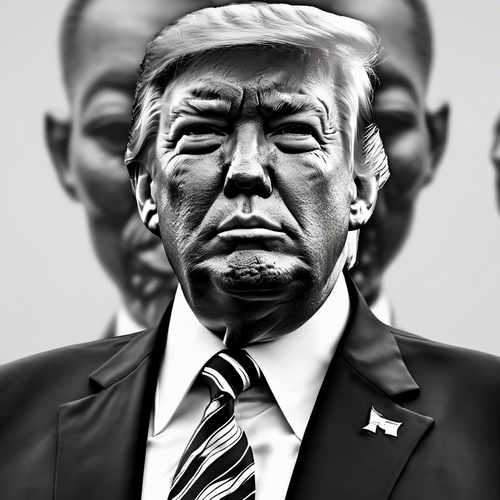
How Trump Misrepresented Images to Support Claims of ‘White Genocide’ in South Africa
In a landscape increasingly dominated by misinformation, few narratives have been as explosive or contentious as former President Donald Trump’s claims concerning a so-called “white genocide” in South Africa. By selectively misrepresenting images and videos, Trump has stoked racial tensions and fueled division among followers, as well as critics. What may have begun as a political rhetoric has now spiraled into a significant global discussion on truth, representation, and the ethics of media. 🤔
Contextualizing Claims of ‘White Genocide’
The term “white genocide” has found its way into the conversation surrounding race relations in South Africa, typically used by far-right groups to assert that white South Africans are facing systematic extermination. However, experts and scholars have consistently denounced this claim as both exaggerated and misleading, highlighting it as a dangerous narrative that ignores the complex socio-political realities on the ground.
According to Statistics South Africa, the reality shows a complex mosaic of economic inequalities and historical injustices rather than a one-dimensional narrative of racial extermination. An estimated 80% of the population is black, while about 8% are of white descent. This demographic disparity lays an intricate socioeconomic backdrop that cannot be simplified into inflammatory assertions about genocide. 📊
The Role of Misinformation
In 2018, Trump made headlines after tweeting that he had instructed Secretary of State Mike Pompeo to investigate the “large-scale killing” of farmers in South Africa. This sparked outrage and further propagated a narrative that has been widely debunked by scholars, media, and international organizations. Instead, the contexts of violence against farmers typically revolve around land disputes and economic inequalities, issues that reflect broader systemic problems rather than targeted racial cleansing. 🚜
Visual Distortion: The Congo Video
One instance that has been cited in the context of these claims was Trump’s use of a video from the Democratic Republic of Congo, which he presented as if it were evidence of violence against white farmers in South Africa. Critics and fact-checkers quickly pointed out that the video depicted an entirely different scenario and location, which was unrelated to the claims of apartheid-era violence or current-day hostility toward white individuals in South Africa. 🔍
“What we’re witnessing here is an alarming pattern of using disjointed visual narratives to create fear and division,” says Dr. Caroline N. Mitchell, a media studies expert. “The danger lies not just in the misrepresentation but in the societal implications it carries.”
Impact on Perceptions and Policies
The ramifications of the “white genocide” narrative do not stop at misinformation; they extend into policy and international relations. Decades of hard-won efforts to dismantle apartheid have been jeopardized as misinformation gains traction. International responses to these claims complicate diplomatic relations, creating a schism between South Africa and nations that back these narratives. 🌍
Furthermore, the echoes of this rhetoric have been felt beyond South African borders, influencing far-right supporters and movements globally. A study by the Southern Poverty Law Center identified a resurgence of white supremacist groups in the United States seeking to exploit Trump’s claims to further their own agendas, showcasing how rhetoric can have a cascading effect across disparate regions. 🔗
Fact-Checking and Accountability
As the media landscape continues to evolve, fact-checking organizations like PolitiFact and Snopes have taken a stand to challenge the false claims circulating in the media and on social platforms. The need for accountability extends beyond just fact-checking; it also requires the public to engage critically with information before sharing it. 🛡️
Conclusion: A Fractured Narrative
Ultimately, Trump’s misrepresentations serve as a critical reminder of the power of imagery and language in shaping narratives. The reality of South Africa is far more nuanced than the simple binaries presented by those casting accusations of “white genocide.” To foster genuine understanding and progress, it is essential that we break through the fog of misinformation and seek the truth behind the headlines. It’s a pivotal moment for media literacy and communal dialogue to repair the fractures wrought by disinformation, ensuring that history does not repeat itself amid choices informed by fear rather than fact. 📖