
A Daughter’s Gaze: Decades After Iconic POW Reunion, a Story of Resilience and Love
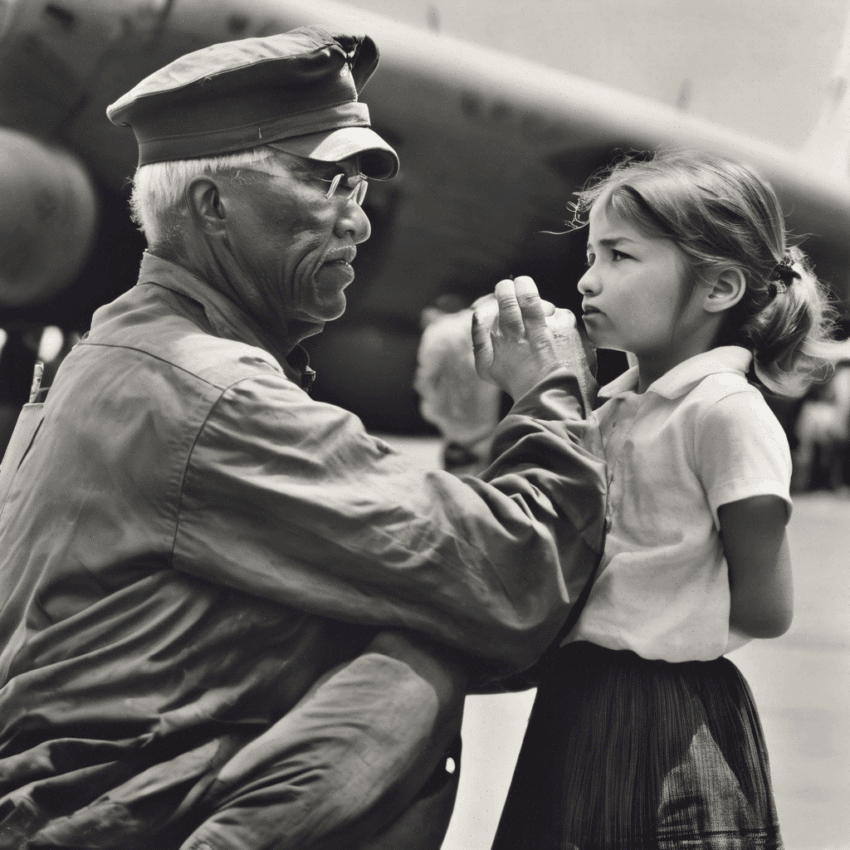
The grainy photograph, tinged with the hues of a bygone era, captures a moment etched in history – a young girl, her face a mixture of awe and elation, reaching out to a man in uniform. It’s 1973, and after years of agonizing uncertainty, this little girl is reunited with her father, a U.S. Navy pilot released from a Vietnamese prison camp. Decades later, the daughter, now a woman with her own family, reflects on that iconic image and the enduring legacy of the Vietnam War. 💖

For Melissa Randall (name changed for privacy), the photo represents more than just a reunion; it symbolizes the culmination of years spent clinging to hope. Her father, Lt. Commander John Randall, was shot down over North Vietnam in 1968. For five years, his status remained shrouded in uncertainty, oscillating between “missing in action” and “prisoner of war.” The family endured countless sleepless nights, fueled by fragmented information and the unwavering belief that he was still alive. 💔
“I remember the constant fear, the whispered prayers,” Melissa recalls. “My mother was the rock of our family, attending POW/MIA meetings, writing letters to government officials, never giving up hope. We clung to every scrap of news, every rumor, desperate for any sign of my father.” ✊
The Vietnam War left an indelible mark on American families, with over 2,500 service members listed as POW or MIA. The uncertainty surrounding their fate created a unique form of trauma for loved ones back home, a constant state of limbo punctuated by fleeting moments of hope. Organizations like the National League of Families of American Prisoners and Missing in Southeast Asia played a crucial role in advocating for these families and keeping the issue in the public eye. 📢
Operation Homecoming, initiated in early 1973, marked a turning point. As part of the Paris Peace Accords, hundreds of American POWs were released, returning to emotional reunions captured by the world’s media. The photograph of Melissa and her father became one of the many enduring images of this period, symbolizing the resilience of families and the enduring power of hope amidst unimaginable hardship. 🙏
“Seeing him step off that plane… it’s a moment seared into my memory,” Melissa shares, her voice thick with emotion. “The mixture of joy, relief, and disbelief. It was like a dream come true.” ✨
While the photograph captures a moment of pure joy, the journey to healing was long and complex. Lt. Commander Randall returned home a changed man, bearing both physical and emotional scars from his years in captivity. The family navigated the challenges of readjustment, seeking support and understanding as they rebuilt their lives. 👨👩👧
Today, the photograph serves as a poignant reminder of the sacrifices made during the Vietnam War, not only by those who served but also by the families who waited, hoped, and endured. It’s a testament to the strength of the human spirit and the enduring bonds of love that can transcend even the darkest of times. 🌟